Best Mattresses for Sleep Apnea (2026): Doctor Approved
Stop losing sleep over this increasingly common disorder. The best mattresses for sleep apnea can help ease symptoms like snoring in up to half of cases and provide the support and comfort you need at night.

- The best mattress for sleep apnea overall is the Helix Midnight Luxe, as its blend of spinal support, comfort, and cooling may help reduce airway blockages. It also works with most adjustable bases to help elevate the upper body to keep the airway open.
- The mattresses in this guide range from $1,339–$2,997 for a queen size (before discounts).
- While a new mattress can’t cure sleep apnea, it can help to reduce symptoms and improve sleep quality.
- A supportive mattress may help ease sleep apnea symptoms like snoring by promoting better spinal alignment and helping keep the airway more open during sleep.
- Our top picks include options for different sleep needs, including side sleeping, cooling, and adjustable-base compatibility.
NCOA supports everyone’s right to age well. We take the time to research, test, and recommend products that can help you live a healthier life. We’ve spent more than 2,500 hours researching and testing mattresses to give you the most accurate product reviews. To find the best mattresses, we:
- Consulted with sleep specialists like doctors, occupational therapists, and physical therapists for guidance on choosing the best mattress
- Put more than 130 models through a series of 19 different tests at our in-house lab
- Mystery-shopped more than 40 brands
- Surveyed more than 2,000 older adults on their sleep quality
- Interviewed experts on the importance of good sleep for older adults
- Worked with older adult testers to evaluate mattresses and get their opinion
- Read thousands of verified customer reviews
We’re constantly testing new mattresses and sleep products to give you the most accurate and up-to-date recommendations. Read more about our mattress review methodology.
Obstructive sleep apnea prevents millions of Americans from getting a proper night's rest. It causes the muscles of the throat to relax too much during sleep, narrowing or closing the airway. How you sleep—your position, temperature, and mattress—can make a big difference. Finding the best adjustable mattresses is one option your health care provider may recommend. But a lot more goes into the best mattresses for sleep apnea than just whether they work with an adjustable bed frame.
“Soft, inexpensive mattresses may lack support and lead to poor spine alignment or pressure points,” said Kendra Becker, MD, sleep medical director at Kaiser Permanente in Fontana, California. “Some mattresses can be so soft that poor alignment can make sleep apnea worsen.” A good, supportive mattress, on the other hand, may help ease symptoms like snoring by keeping the airway open. Our tests found that the Helix Midnight Luxe was excellent for this, providing a strong balance of spinal support, comfort, and cooling. Read on to find out more about all our picks, and how they can help people with sleep apnea get more quality sleep.

Best Overall
Helix Midnight Luxe
Firm, balanced support for better spinal alignment and great cooling to reduce overheating

Best Memory Foam
Nectar Premier Memory Foam
Excellent head, neck, and spinal support and a medium-firm feel for comfort and structure

Best for Side Sleepers
The WinkBed
Blends pressure relief and spinal support to ease joint pain while side sleeping
Best mattresses for Sleep Apnea in 2026
- Helix Midnight Luxe: Best Overall
- Nectar Premier Memory Foam: Best Memory Foam Mattress for Sleep Apnea
- The WinkBed: Best for Side Sleepers with Sleep Apnea
- DreamCloud Classic Hybrid: Best Budget Mattress for Sleep Apnea
- Saatva Classic: Best Hybrid Mattress for Sleep Apnea
- Bear Elite Hybrid: Best for Back Pain and Sleep Apnea
- Nolah Evolution: Best Mattress for Couples with Sleep Apnea
- Titan Plus Core: Best for Higher-Weight People with Sleep Apnea
Need help picking out the right mattress?
Answer 3 simple questions to find a mattress that meets your needs.
The best mattresses for sleep apnea compared
| Comparison Features | ||||||||
|---|---|---|---|---|---|---|---|---|
| Score (out of 10) | 9 |
9.2 |
9.2 |
9 |
9.4 |
7.9 |
9.2 |
9.1 |
| Best for | Overall |
Memory foam |
Side Sleepers |
Budget mattress |
Hybrid |
Back pain |
Couples |
Higher-weight people |
| Brand firmness rating (out of 10) | 6 |
6.5 |
6.5 |
6.5 |
6 |
6 |
6.5 |
9 |
| Trial period (nights) | 365 nights |
365 nights |
120 nights |
365 nights |
365 nights |
365 nights |
365 nights |
365 nights |
*Ratings reflect a brand's overall offering; the best overall pick doesn't necessarily have the highest score
How we tested the best mattresses for sleep apnea
For this review, we tested 30 mattresses identified through our research to offer sleep apnea relief. Older adults put all mattresses through a rigorous testing process to ensure we have real-world data on how they perform.
Here are some of the key qualities we tested for to find the best mattresses for sleep apnea:
Helix Midnight Luxe: Best Overall Mattress for Sleep Apnea
The Helix Midnight Luxe is our pick for Best Mattress Overall for Sleep Apnea. This medium-firm hybrid mattress supports your spine in all sleeping positions. Its firm structure can help keep your airway clearer at night. The Helix offers a good mix of comfort, support, and cooling, and it works well with an adjustable base.
- Helix Review
- Three firmness options that support any sleeping position
- High pain and pressure relief
- Surface stays cool
- Our pain relief score: 4/5
- Accessibility score: 4/5
- Mattress type: Hybrid
- Brand’s firmness rating: 6/10
Pros
- Great scores for midsection support
- Fantastic pressure relief
- Stays cool while sleeping
- Bouncy and easy to move on without pain
Cons
- Doesn’t pair well with an adjustable base
- Lacks seated edge support
Nectar Premier Memory Foam: Best Memory Foam Mattress for Sleep Apnea
The Nectar Premier Memory Foam mattress is our pick for the Best Memory Foam Mattress for Sleep Apnea. It provides excellent head, neck, and spinal support. Testers found side sleeping comfortable, and it’s compatible with adjustable beds for people who prefer elevating their head.

- Nectar Review
- Great for head, neck, and spinal alignment
- Earned a perfect side-sleeping pressure map score
- Had the highest compatibility with adjustable bases
- Our pain relief score: 4/5
- Accessibility score: 4/5
- Mattress type: Foam
- Brand’s firmness rating: 6.5/10
Pros
- Very supportive for side sleeping
- Compatible with adjustable bases
- Isolates motion well
- Above-average edge support
Cons
- May feel too soft for some
- Average cooling abilities
WinkBed Luxury Firm: Best for Side Sleepers with Sleep Apnea
We chose the WinkBed Luxury Firm as the Best Mattress for Side Sleepers with Sleep Apnea. It offers a balanced blend of pressure relief and spinal support. It’s also the best mattress for side sleepers with arthritis because its thick Euro pillow top provides relief under the joints.
- WinkBed Review
- Excellent at easing joint and back pain
- Firm support with a soft feel
- Strong, stable edges
- Our pain relief score: 4/5
- Accessibility score: 4/5
- Mattress type: Hybrid
- Brand’s firmness rating 6.5/10
Pros
- Great for spinal alignment and support while side sleeping
- Flexes with adjustable bases
- Reduces stress on joints
- Keeps cool at night
Cons
- Only average motion isolation
- Edges need stronger construction
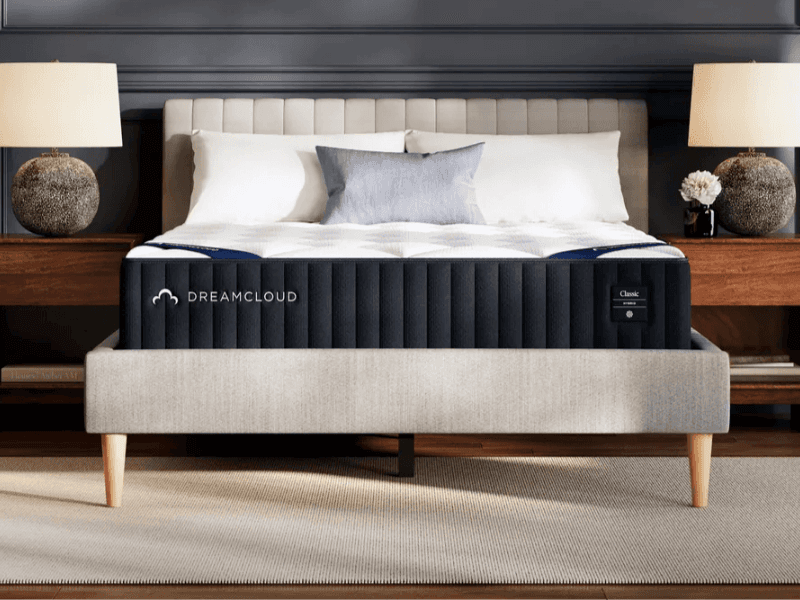
DreamCloud Classic Hybrid: Best Budget Mattress for Sleep Apnea
We chose the DreamCloud Classic Hybrid as the Best Budget Mattress for Sleep Apnea. It offers excellent support and pressure relief at a much lower price than most luxury mattresses. It’s also highly compatible with adjustable beds, which many people with sleep apnea find helpful.
- DreamCloud Review
- Comfortable and supportive on a budget
- High-quality cashmere-blend cover
- Impressive motion isolation for a hybrid
- Our pain relief score: 4/5
- Accessibility score: 3.5/5
- Mattress type: Hybrid
- Brand’s firmness rating 6.5/10
Pros
- High-scoring budget mattress
- Supports recommended positions for sleep apnea
- Great adjustable base compatibility
- Absorbs motion from a sleeping partner
- Doesn’t trap heat
Cons
- Lacks edge support
- Relatively low accessibility score
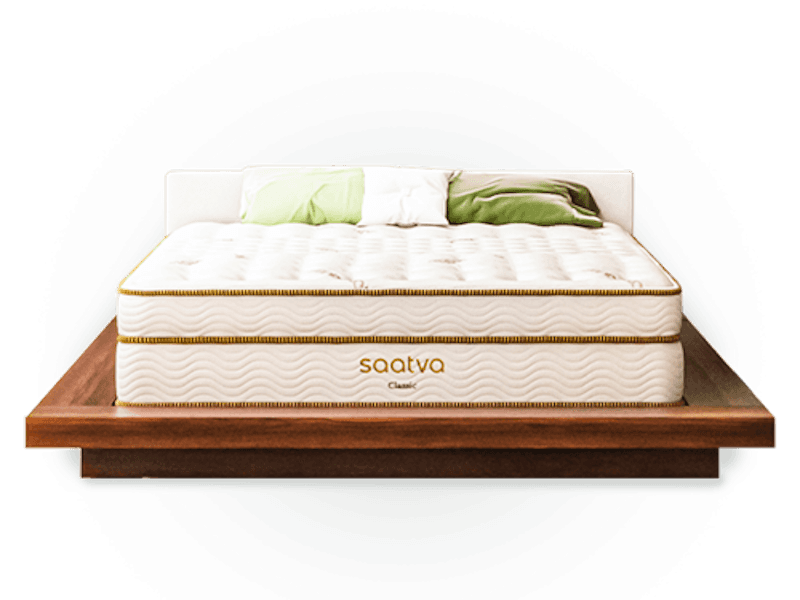
Saatva Classic: Best Hybrid Mattress for Sleep Apnea
The Saatva Classic Luxury Firm is our pick for the Best Hybrid Mattress for Sleep Apnea. It's one of the most well-rounded mattresses for positional comfort.
- Saatva Review
- Keeps the spine aligned in all sleeping positions
- Strong edges help if you use positional devices or a PAP machine
- High bounce helps with moving on and getting in and out of bed
- Our pain relief score: 5/5
- Accessibility score: 4.5/5
- Mattress type: Hybrid
- Brand’s firmness rating: 6/10
Pros
- Exceptional at relieving pressure in all positions
- Decent adjustable base compatibility
- Stable surface and strong edges
- Free in-home delivery and setup
Cons
- May trap heat
- Movement may disturb partner
Bear Elite Hybrid: Best for Back Pain and Sleep Apnea
We chose the firm version of the Bear Elite Hybrid as the Best Mattress for People with Back Pain and Sleep Apnea. It offers gentle back support in all sleeping positions. It also has an above-average pain relief score, so it could help you feel more comfortable at night.

NCOA Exclusive Deal
40% off sitewide with code: NCOA40
- Bear Review
- Even support for side, back, and stomach sleepers
- Promotes airflow for a cool feel
- Solid bounce helps with changing positions or getting out of bed
- Our pain relief score: 3.5/5
- Accessibility score: 3.5/5
- Mattress type: Hybrid
- Brand’s firmness rating 6/10
Pros
- Above-average pain relief score
- Gentle back support
- Good edge support
- Keeps cool during the night
Cons
- Not ideal for light sleepers
- Doesn’t pair well with adjustable bases
Nolah Evolution: Best Mattress for Couples with Sleep Apnea
The Nolah Evolution Luxury Firm is our pick for the Best Mattress for Couples with Sleep Apnea. During testing, it had great motion isolation for sleeping partners. This hybrid also supports every position, so you and your partner don’t need to compromise.

- Nolah Review
- Excellent at containing motion
- Great all-around pressure relief
- Limits heat buildup
- Our pain relief score: 4.5/5
- Accessibility score: 4/5
- Mattress type: Hybrid
- Brand’s firmness rating 6.5/10
Pros
- Excellent motion absorption
- Medium-firm feel is pleasant in all positions
- Decent edge support
Cons
- Average cooling ability
- Not flexible for adjustable beds
Titan Plus Core: Best Mattress for Higher-Weight People with Sleep Apnea
We chose the Titan Plus Core as the Best Mattress for Higher-Weight People with Sleep Apnea. It's made for people with a higher body weight who need strong support and even weight distribution. Sleep apnea is common among people with higher body weight. So having the right mattress can make a big difference in sleep quality.

- Titan Review
- Specifically designed for higher-weight people
- Relieves pressure in all positions
- Perfect score for edge support
- Our pain relief score: 4/5
- Accessibility score: 5/5
- Mattress type: Hybrid
- Brand’s firmness rating: 9/;10
Pros
- Very durable with a 1,000-pound weight limit
- Great pressure relief for any position
- Compatible with most adjustable beds
- Strong, secure edges to help prevent falls
Cons
- May feel too firm for some
- Limited temperature control
What is sleep apnea?
Sleep apnea is a common condition in which breathing is interrupted during sleep, sometimes 30 times or more each hour, according to some sources.9 The most common form of sleep apnea is called obstructive sleep apnea, or OSA. At least 25 million U.S. adults have OSA, according to the American Academy of Sleep Medicine, and probably many more because many people don’t know they have the condition.8
“It is thought that more than 80% of OSA cases go undiagnosed,” said Carlos M. Nunez, MD, chief medical officer of ResMed, a health technology company focused on sleep based in San Diego, California. This can be especially dangerous, Dr. Nunez said, because “Left untreated, OSA may increase the risk of other health conditions, including high blood pressure, heart disease, type 2 diabetes, hypertension, and stroke."
"Sleep apnea occurs when the muscles at the back of the throat relax so much that they fail to keep the airway open, causing breathing to repeatedly start and stop during sleep," Dr. Nunez said. "This can be caused by anatomy, a neuromuscular dysfunction, weight gain, and aging."
While there is no cure for sleep apnea, several treatments and lifestyle changes can help you sleep more comfortably and safely.

26%—more than a quarter—of American adults between the ages of 30 and 70 have sleep apnea.
Sleep apnea symptoms
Many people aren’t aware they have sleep apnea—but it can lead to severe health problems. Even when you think you’re resting the entire night, your body isn’t getting the quality sleep it needs to carry out basic functions.
This can lead to daytime sleepiness and problems with concentrating, memory, and mood. Sleep apnea can also cause low oxygen levels and stress your respiratory and cardiovascular systems, which, over time, can lead to more serious chronic diseases, according to the National Heart, Lung, and Blood Institute.10
“Recognizing the symptoms early and discussing them with your doctor can help you get the right diagnosis and treatment—steps that can help improve your sleep, health, and quality of life," said Dr. Nunez. Some signs you may have sleep apnea include:
- Snoring: People with sleep apnea often snore loudly. But not everyone who snores has sleep apnea, and not everyone with sleep apnea snores.
- Gasping or choking while sleeping: If you sleep with a partner, they may notice this before you do.
- Frequent nighttime awakenings: Your body could be waking you up because you aren’t breathing.
- Dry mouth: Opening your mouth as you struggle to get air can lead to this symptom.
- High blood pressure: Over time, sleep apnea can strain your cardiovascular system.
How sleep apnea affects sleep
Sleep apnea is considered a sleep disorder. It disrupts your natural sleep cycles, preventing deep, healing rest. Symptoms like snoring, fatigue, and frequent nighttime awakenings are signs your body isn’t getting the restorative sleep it needs, said Michael Howell, MD, chief medical officer at Gem Sleep and professor of neurology at the University of Minnesota. Here are just a few ways sleep apnea can affect your sleep:
- You don’t feel rested even after 8 hours: Repeated issues in breathing cause brief awakenings throughout the night, so even after a full night’s sleep, you may wake up feeling tired or groggy.
- Restless sleeping: Because your body keeps waking to restore airflow, you may toss, turn, or change positions frequently, leading to fragmented, low-quality sleep.
- Head or neck pain: Interrupted airflow and muscle tension from poor sleep posture can lead to morning headaches or neck stiffness, common among people with untreated sleep apnea.
The position you sleep in can also play a big role in sleep apnea. “For people with sleep apnea, it’s generally better to sleep on your side or with the head of the bed slightly elevated rather than lying flat,” said Dr. Howell. “When you sleep flat on your back, gravity pulls the jaw and tongue backward, which can narrow the airway and make breathing more difficult. Even small adjustments, like raising the head of the bed or using an adjustable base, can help improve airflow and reduce apnea events.”
When to see a doctor for sleep apnea
Sleep apnea can be a serious condition and is largely underdiagnosed because people don’t know they have it. “If you suspect you have sleep apnea, even if it's mild, you should speak with your doctor about scheduling a sleep study,” said Chelsie Rohrscheib, PhD, neuroscientist and head researcher at Wesper, a home sleep diagnostics company that focuses on sleep apnea. “Sleep apnea is extremely detrimental to quality of life and long term health, and raises the risk for many chronic health conditions like cardiovascular disease, diabetes, cancer, and dementia.”
You can also ask a partner, if you have one, to notice if you are showing any common signs of sleep apnea. “If you snore regularly, feel excessively tired during the day, or have high blood pressure, it’s worth talking to a doctor,” said Dr. Howell. “Other red flags include waking up gasping for air, morning headaches, or heartburn that worsens at night.” Untreated, sleep apnea can cause more serious health problems.
A doctor can help you get to the root of your sleep problems, and getting a diagnosis does not need to be a hassle. “Today, it’s easier than ever to get tested and treated from home,” said Dr. Howell. “The testing for sleep apnea is quick and easy with more availability of home sleep testing options,” agreed Dr. Becker. And once you have a diagnosis, a qualified medical professional can help you discover which lifestyle changes and other treatments may help you sleep more comfortably and safely.
What to look for when buying a mattress for sleep apnea
If you have sleep apnea, the right mattress can help, although it is no substitute for medical treatment from a qualified professional. “At the end of the day, even the best mattress can’t replace addressing the root cause of sleep issues, so if you suspect sleep apnea, get it checked,” said Dr. Howell.
A doctor can also help diagnose positional sleep apnea, where symptoms are more severe when sleeping on your back. Positional sleep apnea occurs in approximately half of all sleep apnea patients, said Rohrscheib. “For individuals with positional sleep apnea, sleeping on their side or at an incline may reduce the severity of their sleep apnea,” she said.
You may not need an entirely new mattress. Sometimes, just fitting your existing mattress in an adjustable base can help. But if you’re in the market for a new mattress anyway, there are a few things to look for that may specifically help you sleep better with sleep apnea.
“The most important thing is to find a mattress that supports your preferred sleeping position, especially side sleeping, and allows good airflow for temperature regulation,” said Dr. Howell. Some other things to consider:
- Support and elevation compatibility: Choose a mattress with firm edges and one that works with adjustable bases to keep your upper body raised and your airway open. If you use a CPAP or adjustable base, it’s a good idea to make sure your setup is compatible with your mattress before you purchase it (even though many mattress manufacturers offer a free trial period).
- Breathability and cooling: A mattress with good airflow and cooling materials helps regulate body temperature for deeper, more comfortable sleep. Research has found that a cooler temperature may improve sleep quality and comfort.
- Motion isolation: If you share a bed and one person uses a CPAP, a mattress with good motion isolation can prevent sleep disruptions when the other person moves.
- Pressure relief for side/back sleepers: Look for pressure relief that helps maintain proper spinal alignment and a position that may reduce airway obstruction. “Usually, a moderately firm mattress is ideal,” said Dr. Becker, because it gives both comfort and support.
- Durability: A good-quality mattress should keep its shape for years. “Often, mattresses are not changed frequently enough due to the high cost, leaving indentations that can lead to a painful night’s sleep,” said Dr. Becker. Try to change your mattress about every 10 to 15 years. A quality, supportive mattress won’t cure sleep apnea, but it can make your nights cooler, calmer, and more comfortable.
How much do the best mattresses for sleep apnea cost?
The mattresses in this guide range from $1,339 to $2,997 for a queen-size (before discounts). Along with size, factors that affect a mattress’s cost include the materials used in its construction, certifications, and added features such as a cooling layer or pillow top, as well as extras offered by the brand.
| Comparison Features | Helix Midnight Luxe |
Nectar Premier Memory Foam |
The Winkbed |
DreamCloud Classic Hybrid |
Saatva Classic |
Bear Elite Hybrid |
Nolah Evolution Luxury Firm |
Titan Plus Core |
|---|---|---|---|---|---|---|---|---|
| Cost for a queen* | $2,499 |
$2,119 |
$2,570 |
$1,540 |
$2,229 |
$2,570 |
$2,277 |
$1,399 |
| Shipping costs | None |
None |
None |
None |
None |
None |
None |
None |
| White glove delivery cost | Starts at $219 |
Starts at $199 |
Starts at $150 |
Starts at $199 |
Free |
Starts at $194 |
Free for orders $1,500 and more, starts at $199 for orders under $1,500 |
No |
| Warranty length | Lifetime Limited |
Lifetime Limited |
Lifetime Limited |
Lifetime Limited |
Lifetime Limited |
Lifetime Limited |
Lifetime Limited |
Lifetime Limited |
| Return fees | None |
None |
None |
None |
$99 |
None |
None |
None |
*Most mattress brands run frequent or ongoing promotions. Sale prices are typically lower and may change often.
Frequently asked questions
What is the best type of mattress for sleep apnea?
The best type of mattress for sleep apnea is one that supports your preferred sleeping position (especially side sleeping), promotes good spinal alignment, and allows good airflow for temperature regulation.
Do adjustable beds really help with sleep apnea?
Adjustable beds allow you to elevate your head, neck, and upper body, which may help open up your airway. If you don’t have an adjustable bed, even slightly inclining your bed so the head is raised could help, said Dr. Howell.
Is it better to sleep flat or inclined with sleep apnea?
“When you sleep flat on your back, gravity pulls the jaw and tongue backward, which can narrow the airway and make breathing more difficult,” said Dr. Howell.
Which sleeping position is best for sleep apnea?
For people with sleep apnea, it’s generally better to sleep on your side than flat on your back or stomach. Positional therapy or devices like pillows may help if you don’t naturally sleep on your side and find it hard to break the habit.
Questions? Email us at reviewsteam@ncoa.org.